

I wrote about OpenClaw four weeks ago, back when it was still called Moltbot (but no longer Clawdbot). In the age of AI, this is an eternity. What I’ve seen since then in this space include much more than just the renaming. The big one of course being how the creator of this “lil’ hobby project” got hired by OpenAI. It doesn’t mean OpenAI now owns the open-source OpenClaw project but it does definitely heat up the competition for dominance in the autonomous AI agent market between Sam Altman and Satya Nadella.
As I wrote back in the Impostor without a syndrome issue in December, Satya has followed my example and started being active on GitHub with his private account. He has now published his first public repo (Philosophical Debate Chamber). I couldn’t get that app running on my PC unfortunately, but I didn’t yet dare to open an issue telling the CEO or Microsoft “does your code even work, bro”.

What was potentially a more commercially important signal was that Satya started following the OpenClaw GitHub project on Feb 10. A few days later, Peter Steinberg announced he had accepted a job offer from OpenAI. Tech press has suggested everyone in Big Tech was bidding in this hiring race and it would be strange if Microsoft hadn’t approached Peter at all. Was it Satya personally, like we’ve heard him now do recruitment calls for strategic AI positions? We may never know.
Claws are now a thing
I haven’t dared to deploy OpenClaw anywhere because it’s a security disaster waiting to happen. That concern hasn’t stopped everyone, though. For example, the Microsoft CVP of Word recently shared his OpenClaw setup out in the open:
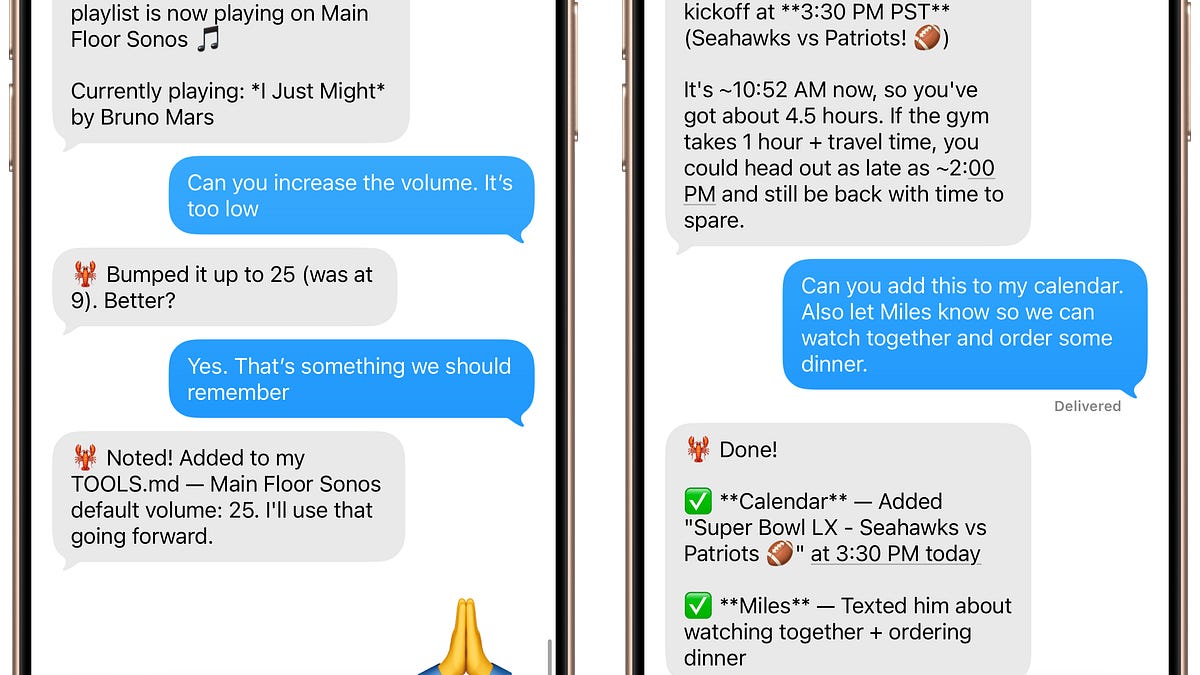
I sure hope the newsletter name “Omar knows AI” is backed by more than vibes and that this senior leader at Microsoft knows how to keep things secure. But let’s get back to that part later in the newsletter. The key thing is not the problems of this technology but rather the fact that “claw” has become a tech thing. Because Andrej Karpathy said so and Simon Willison backed it up:
“Andrej has an ear for fresh terminology (see vibe coding, agentic engineering) and I think he's right about this one, too: "Claw" is becoming a term of art for the entire category of OpenClaw-like agent systems - AI agents that generally run on personal hardware, communicate via messaging protocols and can both act on direct instructions and schedule tasks.”
Just like there initially wasn’t a great definition of what an AI agent is exactly (before the geeks settled on “LLMs calling tools in a loop”), that won’t stop everyone from adopting the term. 2025 was the year of vibe coding and now everyone is doing it or at least talking about it. Microsoft started talking about “vibe working” in September and has since then also launched an official Power Apps app type called vibe app. It’s silly — and it’s a thing. Both can be true at the same time.

Andrej Karpathy on the chat → code → claw evolution of AI.
This all makes it almost certain we’ll see a “Microsoft Claw 365” kind of a thing from Redmond in the near future. (Fun fact: there was a CLAW from Microsoft Research for the VR/Metaverse era). Let’s imagine for a moment how this might turn out.
What would Clawpilot look like?
The title for this newsletter issue is of course a dig at the “UI for AI” pitch that Microsoft has used for Copilot. I’m known for sharing a bit of critique at this approach as well as using numbers to back up my claims about the Copilot-first strategy not working as advertised.
If injecting a Copilot sidecar into every software product’s UI didn’t have the transformative impact expected, maybe it’s time to rethink the strategy? In the minds of many consumers especially, Copilot has become a brand that symbolizes overblown claims and the modest everyday impact of AI. Nobody rushed out to buy Copilot+ PCs so that they could use more of these features, or get the dedicated Copilot key to do… Yeah, what is it actually for?

Even Drake isn't too impressed with Copilot anymore. But Clawpilot? Now THAT’S an idea!
The problem with Copilot-style AI assistants is that often they’re all talk, no hands. The fact that I keep seeing social posts announcing exciting new features for Copilot, then see them fail immediately when tested, is not the formula for customer retention. People will stop trying — then they’ll stop renewing the AI license subscription.

What’s the problem with Claws then? Well, they’ve got hands — that’s the major difference. The models used behind the scenes are mostly the same as with the all-talk AI assistants — running in the cloud rather than the local box (at least for regular Crab people who aren’t in it for digital sovereignty reasons). The scheduled nature of Claws is also very different from the interactive Copilots that require you to chat with them for anything to happen. But the core problems of LLMs in business use remain. Or more precisely: they are amplified.

Subscribe to Plus to read the rest.
Become a paying subscriber of Perspectives Plus to get access to this post and other subscriber-only content.
Upgrade